Inviting You to Holding Space: Supporting People in Pain

When we are in pain, uncertainty, grief…
having space held for us
reduces the suffering of isolation and supports us in our challenges.

We sometimes back away from those in pain
because we don’t know what to say…
because we fear hurting them with the wrong words…
because their pain stirs our own fears so profoundly.

Let’s talk about finding words and actions that support others when they are challenged.

Join a conversation with me and Business and Empowerment Coach, SB Rawz, The conversations will be 45 minutes, confidential…and free.

Sunday, November 19, 11:00 AM EST

Wednesday, December 6, 3:00 PM EST

Monday, December 11, 8:00 PM EST

RSVP at calendly.com/sbrawz/holding-space or to me at TheAgeCoach@gmail.com

Winter! Hot Chocolate with Tiny Marshmallows

A cup of hot chocolate with tiny marshmallows, soft music in the background and frost on the windows.

Sounds like a Hallmark winter!

But we need even more for a happy and healthy winter.

As the temperatures fall, it’s important to be intentional about navigating the season. The same activities that make us smile can also protect our bodies and brains.

  • Eat well: Hot chocolate warms the body. Stews and soups, full of vegetables and healthy broth, provide an easy recipe for strength, nutrition, and warmth.
  • Stay hydrated: Add herbal teas and some coffee for warmth and to help blood cells carry nutrients and oxygen to all parts of the body and brain. Fluids have a positive impact on heart health, cognitive alertness, fighting infection…and so much more.
  • Be warm: Maintaining body heat becomes more difficult with age. Layer textured or silky t-shirts under a shirt, topped with a light sweater for inside and a jacket for outside. Thin layers close to the body reserve body heat.
  • Monitor safe travel: Check on the possibility of snow or ice. Plan ahead for someone to clear paths around your house or, better yet, to deliver what you need.
  • Exercise: Exercise is important for the health of the body and brain, but long walks, tennis and a pickup ball game may be out of the question. Winter is a good time, though, to go to the gym for classes to strengthen all parts of the body, challenge the brain, and socialize.
  • Complete a project: Gardening and outside repairs may not be fun in the cold, but you can pick up a project that has been on your mind: organizing photos, thinning out bookshelves, making decisions about household items you haven’t used in years.
  • Learn: What a fine time to settle in with books you have been meaning to read or to learn to play the guitar that is sitting in the corner. Classes at community centers and online offer seemingly unlimited choices for learning new information and skills.
  • And most importantly, socialize: Plan times for long coffees with friends, make regular phone calls, go to community events. Being with people you enjoy can lead to healthier bodies and brains.

Winter can be a “Hallmark moment” when we navigate the season with activities that make us smile.

Would you like to talk about new ways that you…or someone you are caring for… can stay active, healthy and “enjoying life’s hot chocolate”? Contact Dr. Cheryl Greenberg at TheAgeCoach@gmail.com.

Feeling a Little Discouraged by Virus Concerns? Sing a Song!

“I don’t sing because I’m happy; I’m happy because I sing.” – William James

What a great thought! We are looking for ways to feel happy and engaged while still coping with pandemic concerns and rules. How about singing?

If music is not a big part of your life, consider this:

  • Singing familiar songs reduces stress: Breaking into song signals the brain to send hormones (endorphins) through your brain and body that make you feel more content and less stressed. And as researchers have shown, decreasing stress improves overall health and longevity!
  • Singing connects you to pleasant memories: Even people who have concerns about how well they remember find that songs from their childhood or their first love come back to them when they sing, with all the words and feelings they had when they were younger.
  • Singing improves brain function: When you sing, you use many parts of your brain and build new pathways between the cells in your brain. This improves your ability to remember and increases your brain’s “reserve” for remembering in the future.
  • Singing can increase social interactions: Singing in a choir or singing at home with family is not only fun but gives you a chance to build social connections. People who have close bonds with others are happier and healthier.
  • Music has a direct impact on mood and wellness; it has been shown to ease pain, shorten recovery time from illness, and lift feelings of anxiety and depression: How about singing out loud or listening to a favorite playlist?
  • And let’s add some movement to increase the benefits: Tapping your feet, swaying to the rhythm, or whirling around the room with your best version of Beyoncé or Mozart is terrific for the brain and body. Each time you move to music, challenging your brain to coordinate dance steps and melodies, you exercise your muscles, build cardiovascular health and improve your ability to  remember and think.

Singing, dancing  . . . music in general . . . are good for your health, enjoyable, and with the challenges of the pandemic, a particularly helpful way to reduce stress!

Dr. Cheryl Greenberg works as a coach, or guide, for seniors and their families as they consider and plan for changes in their lives. During the pandemic, she leads support groups to help folks stay engaged in creative ways. To join a group or coach with Cheryl, contact her at TheAgeCoach@gmail.com or 336-202-5669.

How to Decide about “Aging in Place”

In the last few years, a number of studies found that about 90% of mature adults reported that they wanted to “age in place.” That is, they didn’t want to leave their homes; they didn’t see retirement communities or assisted living as desirable for themselves.

Recently, though, the number of people who plan to age in place has decreased some. People are noticing  that in-home caregivers, who may be needed at some point, are sometimes difficult to find. Others are concerned about becoming isolated as they stop working, drive less and generally are more cautious about venturing out at night or in inclement weather. And some people feel pressure to “make a decision now,” to move into a Continuous Care Retirement Community (a CCRC) where they can live independently, hearing that they will not be admitted by some CCRCs if they develop a need for health assistance.

Of course, you will make the choice that is best for you; but before you do, here are some ideas to think about that might help with your decision making. Your answers to these questions will help you make plans for staying in place.

  1. Have you completed a financial check-up? For example, how much money would you need to stay in your home or move to a retirement community? What can you afford now? If you stay in place, what arrangements have you made to ensure that your living arrangements, home maintenance, food, transportation, health care and entertainment are covered?
  • How is your health (and the health of anyone else with whom you live)? Do you have many health needs? Which friend or family member would you call on if you needed assistance with activities of daily living or a medical issue? Which professional agency might you hire?
  • How safe is your home? What adjustments would make your home safer if, for example, steps or bathtubs become a problem or someone in the home becomes confused?
  • How comfortable is your home? Would it be easier and safer to stay in your home if you sorted through and gave away some of your possessions and memorabilia? Do you have HVAC, seating, carpeting, etc. that are appropriate for any physical changes you may experience?
  • Can you socialize frequently? Do you live close to loved ones and friends whom you can easily see if transportation isn’t available or you do not drive? How might you stay in touch with friends and family from a distance, if necessary?
  • And, now looking at some of these questions, think again about your financial check-up. Are you ready for home modifications, assistance for health care and home maintenance, and other changes for your comfort and safety if staying in place is your choice? Budget now for the “just in case” scenes.

Answering these questions will provide you with a solid foundation for making healthy, safe and satisfying plans to stay in your home.

I would be happy to meet with you as you think through your plans . . . and help you find experts in finances, downsizing and such if you need these services.

Should Older Adults Write New Year’s Resolutions?

When we were children, we couldn’t wait to stay up until the ball dropped in Times Square, the confetti was tossed, someone sang Auld Lang Syne … or whatever meant that we didn’t have to be in bed at the usual time.

As young adults, we looked for parties and threw the confetti ourselves. We were mature enough, we believed, to take on the world. We wrote New Year’s resolutions that we took seriously, for a couple of days at least.

And then in middle age, we may have been a bit more subdued, but noting the year and thinking about the future were still important for December 31.

So, what about older adults? Have they seen it all? Are they “over” celebrating? Should they have a special early afternoon party and plan to be in bed at the usual pre-midnight time?

I suggest, rather emphatically, no!

As long as older adults are physically and cognitively healthy, celebrating and writing resolutions can still have real meaning for them. Planning new activities, engagement with family and friends, volunteering or working, refurnishing their houses or moving to new communities . . . new life adventures . . . may be some of their resolutions for the new year.

As C. S. Lewis wrote

Are you an older adult? Do you live with or care for an older adult?

I invite you to take time to celebrate the new year and write your resolutions for 2019!

If you would like suggestions for New Year’s Eve celebrations and making resolutions, look at New Year’s Eve & Resolutions (Home Care Assistance) and New Year’s Eve Party Ideas (Medicare).
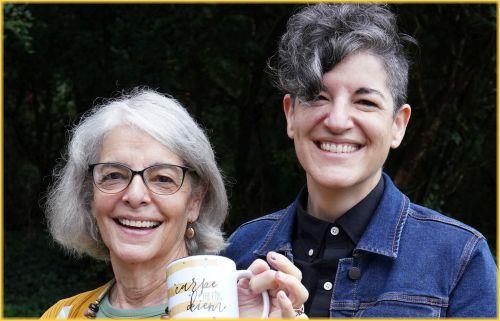
Too Young to Be a Grandmom?!

Recently, “Grandma to Be” sent a letter to advice columnist (and Wait, Wait Don’t Tell Me panelist – yeah!) Amy Dickinson.

Grandma to Be wrote with pleasure that her daughter was expecting her first child. However, she also wrote that she had an 8-year-old step grandchild. She didn’t publicly acknowledge this youngster because she didn’t want her friends to think she was old enough to have been a grandparent for almost a decade.

Dickinson answered, essentially, that life happens when it happens. Embrace the reality.

Right!

And I would go even further. Embrace new paths. Embrace change. Embrace the possibilities! New paths can be exciting and joyous.

Becoming a grandparent is one new path that we may come to as we get older.  What are other paths you are considering for your life?

  • A new job
  • Retirement
  • Playing with your grandchild
  • Caring for an older relative
  • Moving to your dream home
  • Moving to a senior community
  • Taking up a new sport
  • Traveling across the United States


To read Grandma to Be and Amy Dickinson’s letters, go to Too Young to Be a Grandmom.

For help thinking about and planning your new paths, contact Dr. Cheryl Greenberg at TheAgeCoach@gmail.com. She will be happy to meet with you, at no cost for a sample session, to see if coaching is a good fit for you.

Why Did Pablo Casals Practice at Age 90?

The legendary cellist Pablo Casals asked why he continued to practice at age 90.

“Because I think I’m making progress,” he replied.

How brilliant! How positive! How engaged in life!

The Myth of the Rocking Chair

The myth about getting older is that seniors can’t work, play or learn, at least not well. When folks believe the myth, they think they must polish up the rocking chair and isolate themselves. They feel useless to others and bored with themselves.

But that is a myth.

Pablo Casals composed his last composition in 1971, at age 94. He traveled to Israel to conduct the Jerusalem Symphony Orchestra at age 96.

Astronaut and Senator John Glenn went into space at age 77.

Everyone remembers that Grandma Moses took up painting when she was 76.

And it isn’t only famous people who have accomplished great things as seniors. In June 2014, Charlotte, N.C. resident Harriette Thompson completed her 15th marathon . . .  and broke a record for women in her age group.

Teiichi Igarashi, a former lumberjack, climbed Mt. Fuji when he was 100 years old!

The Reality of New Accomplishments

There is only one secret to accomplishing great things as a senior: refusing the rocking chair and engaging in life.

What new skill would you like to develop? What new adventure is on your horizon? What passion would you like to pursue? How will you complete the sentence, “I did ­­­­­­­­­­­­­­­­­­­­­____________ at age ____________?


Hear an interview with Harriette Thompson at 91 Year Old Breaks Record.


Caregiving: Can You Make Medical Decisions?

Who Can Make Medical Decisions in a World with HIPPA?

American’s medical records are protected by the Health Information Portability and Accountability Act (HIPAA). Neither friends nor relatives have access to our medical information without the express consent of the patient.

This is usually comforting in a world with so much data and so much communication!

But what happens when a senior needs help with his or her medical decisions? What happens if there are end of life decisions to be made?

Three legal documents give others insight and permissions on behalf of a senior.

  • HIPAA authorization gives permission to the doctor to share medical information with the person(s) that the patient names.
  • An advance health care directive (living will) lists/describes an individual’s preferences about medical care, including whether certain life-sustaining treatments should be administered.
  • A medical power of attorney (health care proxy, durable power of attorney for health care) identifies someone who can act on behalf of the individual if needed.

It is not always comfortable to think about illness and end of life decisions. However, there are many resources available that can help. Attorneys are skilled at advising and preparing the documents. Information and forms are available in print and on the Internet, as well.

For a brief description of medical powers of attorney and living wills, look at WebMD.com’s Advance Directives.


Is This Dementia? Memory Changes

He isn’t remembering well. Does He Have a Dementia?

How often has a loved one forgotten something and, for a split second, you said to yourself, “Why didn’t he remember that? What does this mean? Should I be concerned?” Here are guidelines to help you.

The car keys are missing. Is he losing his memory?!

  • We all put our house keys down and forget where we put them.
  • We forget a name even though we know the person.
  • We go to the supermarket for eggs and come home with coffee, bread . . . but no eggs.

Are these signs of dementia?

Everyone forgets from time to time. As we get older, we forget more often.

However, it is not a sign of dementia if we can remember the keys, name and eggs after a little while and our forgetting doesn’t stop us from carrying out our normal activities.

Some forgetting is normal. Taking a little longer to remember as we get older is also normal.

Memory changes that interfere with independent activities – our work, social life, conversations, reading and learning – may indicate a health problem that should be checked by a doctor.

These memory changes may include

  • Not being able to find the right words to express something, not following a conversation, or having difficult completing a thought
  • Forgetting names of people and places
  • Being confused about where one is, not knowing how to get to a familiar location, or not being able to retrace one’s steps
  • Having difficulty recalling the information needed to make appropriate judgements and decisions
  • Not recalling where an item has been placed even with time and effort

HelpGuide.org offers a quick look at how to figure out what forgetting the car keys might indicate at What Does My Forgetting Mean?